
Our Verdict
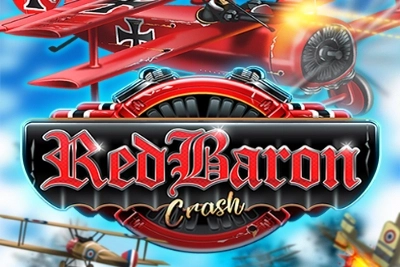
Red Baron is a crash game built for players who want something faster and more decision-driven than a slot. You set your multiplier target, you watch the plane climb, and you decide when to bail. That's the whole game. It's simple, it's tense, and for the right player, it's genuinely engaging.
The 97% RTP puts it above most slots on paper. House edge sits at 3%, which is competitive. But this is a high-variance format. Rounds end in seconds. A bad streak hits hard and fast, in a way that a slow slot session simply doesn't. If you're comfortable with that, Red Baron Canada delivers a sharp, well-built experience. If you're not, the pace alone can be a problem.
Bottom line: it's a legitimate game worth your time if you go in clear-eyed. Not a guaranteed earner. Not a system to master. Just a well-designed crash game with fair odds and real risk.
What We Like and Don't Like
Pros
- 97% RTP is strong compared to most online casino games available in Canada
- Rounds are fast, so you stay engaged without long waits between decisions
- The cash-out mechanic puts real choice in your hands each round
- Works well on mobile without needing a download or app install
- The WWI theme is distinct enough to feel like a real product, not a generic reskin
Watch-outs
- High variance means losing streaks arrive quickly and can drain a session budget fast
- The pace makes it easy to lose track of time and money spent
- No bonus rounds or free spins mean there's no 'recovery mechanic' built into the game
- Availability depends on your operator and province, so not every Canadian player can access it
RTP, Odds and What They Actually Mean
Red Baron runs at 97% RTP. That number matters, but it's easy to misread what it actually says. RTP is a long-run theoretical figure calculated across millions of rounds. It tells you that, over an enormous sample, the game pays back $97 for every $100 wagered in total. It says nothing about your session tonight, your next ten rounds, or whether you'll be up or down after an hour.
The house edge is the flip side: 100% minus 97% gives you 3%. That's the mathematical advantage the house holds on every dollar you wager. It's small compared to many games, but it compounds across every round you play. The more rounds you play, the more the math trends toward that edge.
The table below shows approximate probabilities for reaching common multiplier targets. These are illustrative figures based on typical crash game mathematics. Actual values in Red Baron may vary, and Evolution does not publish round-by-round probability breakdowns publicly.
| Target Multiplier | Approximate Chance of Reaching | Example Payout on $10 Bet |
|---|---|---|
| 1.2x | ~83% | $12 |
| 1.5x | ~65% | $15 |
| 2x | ~48% | $20 |
| 3x | ~32% | $30 |
| 5x | ~19% | $50 |
| 10x | ~9.7% | $100 |
Read that table carefully. Hitting 1.2x sounds easy at 83%, but you're only collecting $2 profit on a $10 bet each time. Aim for 10x and you're cashing out less than one round in ten. Neither target is wrong. They're just different risk profiles, and neither one beats the house edge over time.
Variance is what makes the short run feel so different from the long run. A 97% RTP game can still produce a session where you lose 80% of your buy-in inside twenty rounds. That's not the game being unfair. That's variance doing exactly what variance does. A high RTP reduces the house's long-run take. It doesn't smooth out the bumps you'll feel in a single session.
Fairness and Round Independence
Evolution uses a certified random number generator to determine each round's crash point. The result of every round is generated independently before the round begins. That means the game has no memory. A crash at 1.1x three rounds in a row doesn't make a high multiplier 'due.' A string of big multipliers doesn't signal a crash is coming. Each round starts fresh, with no connection to anything that came before it.
Some Evolution crash titles use a provably fair system, where the crash point is cryptographically seeded and verifiable after the round ends. Whether Red Baron specifically exposes that verification layer depends on the operator platform you're playing on. What you can rely on regardless is that Evolution's RNG is independently audited by third-party testing labs. The certification is real and the game isn't adjusted round to round based on your balance or behaviour.
This is also why predictor apps can't work. There's no pattern to detect, no signal to read, no upcoming crash point to predict. The round doesn't exist until the RNG generates it. Any tool claiming to predict results is either guessing randomly or outright misleading you.
Volatility and What It Feels Like
High variance doesn't just mean big wins are possible. It means big losses are possible, and they can happen fast. In Red Baron, a round can be over in under ten seconds. String together a few early crashes and your session budget takes a hit before you've had time to think. That's not a glitch. That's the format. The same speed that makes crash games exciting is what makes them financially dangerous when you're running cold.
The pace is a genuine risk factor that doesn't get talked about enough. Slots have spin animations, loading screens, bonus sequences. They slow things down. Crash games don't. A $200 session budget can disappear in three minutes on a bad run, and the rounds blur together in a way that makes it hard to track how much you've actually wagered. If you're going to play, set a hard session limit before you start and stick to it. Check the strategy guide for practical session planning ideas.
Mobile Experience
Red Baron runs in your browser. No download, no app store visit, no storage space needed. The interface scales cleanly to phone screens, and the cash-out button is large enough to tap accurately under pressure. That matters in a game where timing is everything. It holds up on mobile data connections too, though a weak signal mid-round is a risk you should account for.
For a full breakdown of compatibility, supported browsers, and what to do if you hit connection issues, the mobile guide covers it in detail.
Who Should Play Red Baron
Red Baron suits players who like fast rounds, want some agency in the game, and can genuinely absorb variance without it affecting their decisions. If you can set a session budget, watch it swing, and walk away when it's gone without chasing, this format works for you. The decision element, choosing when to cash out, gives the game a feel that's different from pure chance. That said, the house edge is still there every round, and no amount of good timing erases it.
Skip it if you find losing streaks hard to walk away from. Skip it if you're drawn to games because you believe a system can beat them. Skip it if the pace of play makes it hard to track what you're spending. Crash games in general aren't forgiving of impulsive play, and Red Baron is no exception. There are slower, more predictable formats that suit some players better, and there's no shame in knowing which category you're in.